University Scholars Program · UF Class of 2028
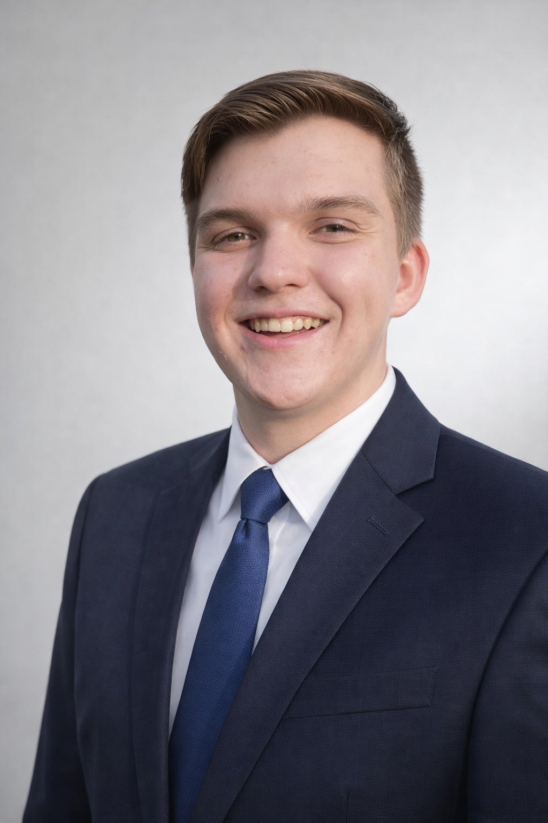
Logan Scott
I build the software that turns education research into something a seven-year-old can actually use.
I am a Computer Science major and Statistics minor at the University of Florida, and the Lead Developer at UF’s Virtual Learning Lab. My research sits where machine learning meets literacy instruction: teaching language models to write, deliver, and score reading assessments for elementary school students.
About
“One of my long-term career goals has always been to contribute to projects that positively impact people’s lives.”
I came to the University of Florida in 2024 through the University Research Scholars Program, an invitation extended to the top 2% of the incoming class, and I started looking for a research home almost immediately. I found one at the Virtual Learning Lab in the College of Education, where software is not a side effect of the research; it is the instrument. If the app does not work, the study does not happen.
Today I serve as Lead Developer for the lab, directing the technical architecture behind nine research projects and roughly thirty team members building Storiza, an AI-powered digital literacy platform used by real elementary classrooms. I have written the natural language processing and speech recognition pipelines that grade a child’s oral reading, the generative AI systems that write branching stories, and the assessment engine that is now the subject of my own research. I joined the lab as a research assistant in 2025 and served as Scrum Master for two research teams before taking over as Lead Developer.
That production experience shapes how I think about research. It is not enough for a model to score well on a benchmark; it has to hold up on a Chromebook, in a noisy classroom, in front of a second grader. Project MAZE has taken an idea from a hypothesis to a deployed feature to a paper accepted at NCME’s AIME-Con 2026, and seeing that full arc has shaped how I approach every problem since.
Outside of the lab I am usually pulling apart large public datasets for fun. Long term, I plan to specialize in machine learning, and I want to keep pointing it at problems where a better model means a better outcome for somebody who is not in the room when the model is trained.
Research interests
What I want to be known for
Broadly: applied machine learning for education, and the measurement problems that come with it. Specifically, these four threads keep showing up in my work.
Automated assessment generation
Using large language models to produce curriculum-aligned reading passages and items on demand, so formative assessment is not capped by a fixed bank of standardized passages.
Psychometrics for AI-generated items
Reliability and validity are the hard part. I am interested in scoring models that normalize for word complexity and item difficulty so scores stay comparable across generated forms.
Speech & NLP for young readers
Automatic speech recognition for K–2 oral reading fluency, real-time pronunciation feedback, and the messy reality of transcribing children who are still learning to decode.
Intelligent tutoring systems
Self-regulated learning, adaptive narrative, and the research-to-production pipeline that gets any of it in front of a student before the semester ends.
Selected recognition
Highlights
AIME-Con 2026 accepted paper
“Automated Generation and Scoring of Maze Reading Comprehension Assessments,” accepted through peer review for the NCME Artificial Intelligence in Measurement and Education Conference, Pittsburgh, PA.
AI Scholar
One of 50 undergraduates selected university-wide for a stipend-funded, year-long AI research program with a faculty mentor.
University Research Scholars Program
Invitation-only program offered to the top 2% of incoming UF students, including a $2,000 scholarship and early entry into UF’s research ecosystem.
Contact
Get in touch
I am always glad to talk about AI in education, measurement, or anything adjacent, and I am open to research collaborations and internships. Email is the fastest way to reach me.
- loganscott1@ufl.edu
- (941) 201-9037
- Gainesville, Florida